DROR: Revolutionizing Living City Architectural Design Through Biostandard Innovation
A new model for city growth—built with nature, proven with science, scaled with culture.
Executive Brief
Key Takeaways
- •Supernature addresses $3.2T urban development market with nature-aligned design methodology proven to reduce infrastructure costs 20-40%
- •Three-tier ecosystem: Bioplanning Institute (certification framework), AI Lab (design acceleration tools), Supernature Labs (flagship implementations)
- •LIFE certification system creates new category in district-scale regenerative development, positioning ahead of conventional green building standards
- •Open-source frameworks enable rapid global adoption while AI tools democratize sophisticated ecological planning
- •Billion+ urban residents projected benefit over next 30 years as cities adopt regenerative design principles
Market Opportunity
$3.2T global urban development annually; 2.5B new urban residents by 2050; $10T climate adaptation infrastructure spend required
Strategic Position
First-mover in AI-accelerated regenerative urban planning with proprietary LIFE certification framework and proof-of-concept flagship districts
Timeline to Impact
Institute frameworks operational; AI platform in beta deployment; first flagship districts underway; global licensing pipeline developing 18-36 months
Investment Thesis
Capital Deployment Rationale
Capital enables development of open-source frameworks that transform how $3.2T annual urban development is planned globally. Investment supports creation of AI tools that democratize regenerative design, Indigenous knowledge integration, and flagship proof-of-concept districts. Asset-light approach focuses on IP licensing, certification revenue, and consulting rather than property ownership.
Return Framework
Multi-dimensional returns: (1) Certification licensing revenue as LIFE framework scales globally, (2) AI platform subscriptions to municipalities and developers, (3) Consulting fees for flagship implementations, (4) Environmental ROI measured in carbon sequestration, biodiversity recovery, and infrastructure cost savings (20-40% reductions), (5) Social impact through improved urban wellbeing for billions
Scalability Multipliers
- →Open-source frameworks enable adoption at zero marginal cost to deployers
- →AI acceleration tools compress 18-month planning cycles to weeks
- →Modular certification system adapts to diverse regional contexts without core redevelopment
- →Each flagship district creates replication blueprint and local advocate network
Strategic Considerations
Long development cycles for urban planning adoption; municipal budget constraints; requires patient capital for framework establishment; high strategic value for ESG-focused institutional investors; regulatory tailwinds strengthen over time
Market Context
Market Size
$3.2T annual global urban development market; 2.5B new urban residents by 2050 requiring housing, infrastructure, services; $10T climate adaptation spending required through 2050; $6T green building materials market
Competitive Position
Differentiated positioning: district-scale regenerative systems vs. building-level efficiency; nature-aligned geometry vs. conventional planning; AI-accelerated design vs. manual processes; no comprehensive competitors integrating certification, AI tools, and flagship implementations
Policy Tailwinds
Paris Agreement urban emissions targets; EU Green Deal urban provisions; IPCC calls for regenerative infrastructure; growing Indigenous land rights recognition; climate adaptation mandates in 100+ cities; nature-positive development incentives spreading globally
Macro Trends
Urbanization acceleration (68% global population urban by 2050); climate adaptation urgency; Indigenous knowledge revival; AI transformation of planning workflows; ESG requirements expanding; nature-based solutions gaining policy support; municipal bankruptcies from infrastructure costs
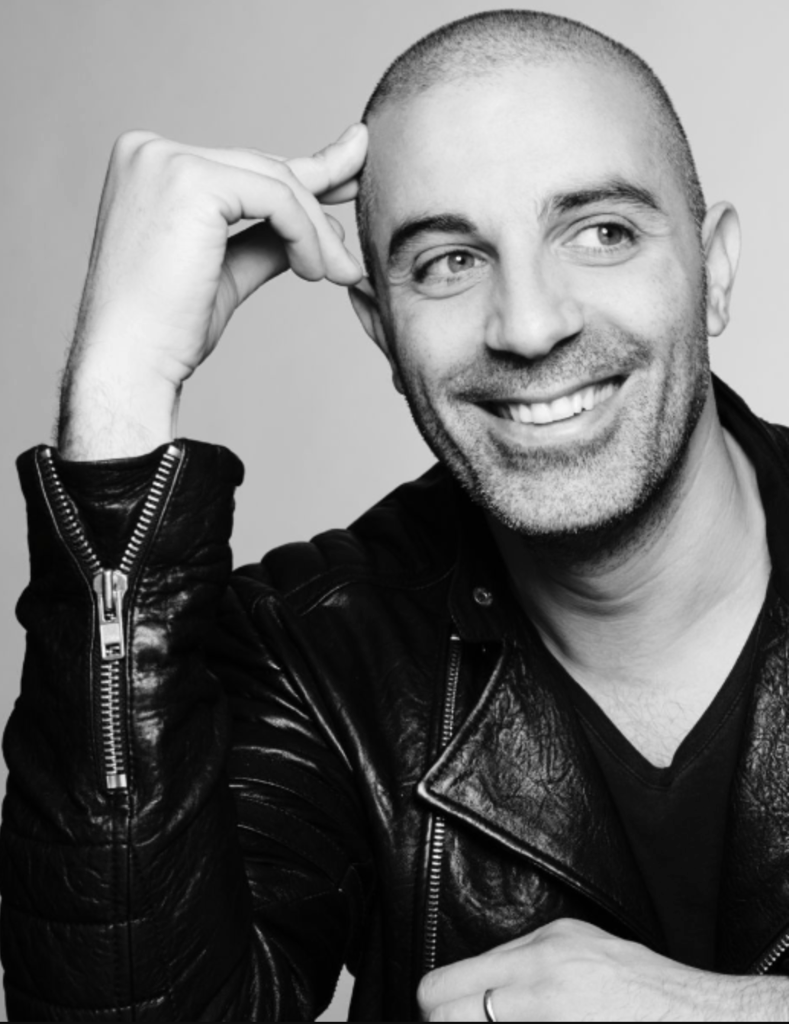
Meet Dror Benshetrit
Dror Benshetrit is a designer and city-builder working at the intersection of ecology, culture, and the future of urban life. As founder of Studio Dror and the originating visionary behind Supernature and Bioplanning, he has spent years developing a new approach to how communities are planned—one that treats cities as living systems rather than mechanical grids.
His work spans product design through large-scale master planning, and he leads Supernature's creative direction, partnerships, and long-range vision across the Institute, the AI Lab, and flagship ecological districts. Dror's career represents the convergence of design excellence with measurable ecological and social impact.
What distinguishes Benshetrit's approach is not merely technical innovation, but a profound understanding that the future of human habitation depends on reintegrating built environments with natural systems—transforming cities from extractive machines into regenerative organisms.
Across history, the most durable leaps in civilization have happened when art, science, and civic ambition move together. The Renaissance didn't emerge from commerce alone—it bloomed where patronage met genius, where beauty intertwined with mathematics, where vision transcended the immediate. Today, humanity is entering the largest wave of city-building ever—an era where what we design, and how we design it, will shape the lives of billions and determine whether ecosystems recover or unravel.
Here's the thing: we're not just talking about prettier buildings or greener rooftops. We're talking about a fundamental reimagining of how human settlements relate to the living world. Supernature exists to change the trajectory of that moment—not by optimizing the old way of building, but by offering a new model for how cities can grow as living systems, rooted in ecology, human wellbeing, and place-based culture.
"The question is not whether we will build. The question is whether we will build systems that heal or systems that harm."
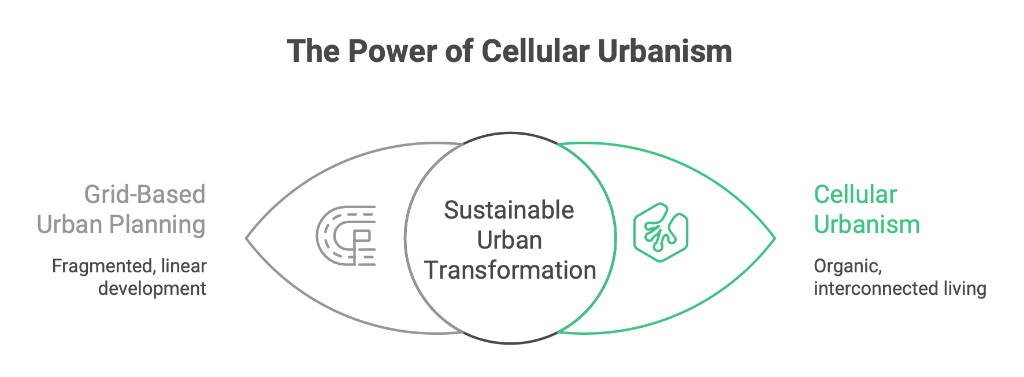
Three Movements, One Vision
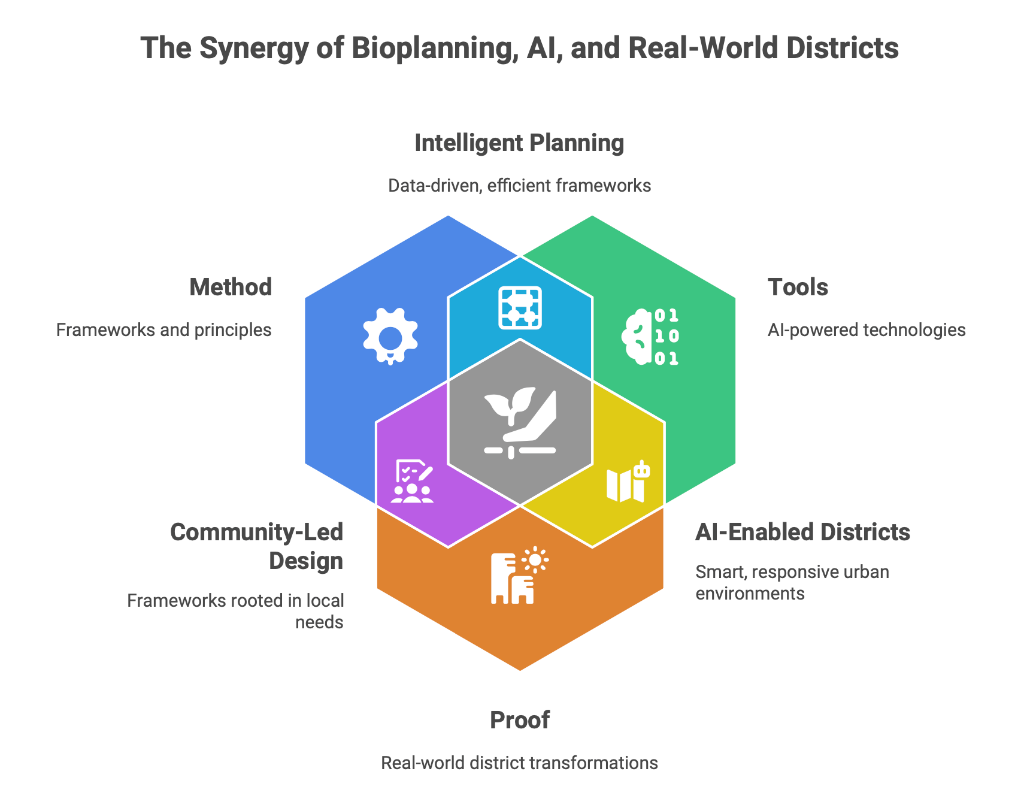
Supernature operates as an ecosystem of three interconnected efforts, each addressing a critical gap in how cities are conceived, planned, and built. Think of it as method, tools, and proof—the intellectual framework, the practical instruments, and the tangible demonstrations that together form a complete system for ecological urbanism.
The Bioplanning Institute serves as the intellectual foundation—a mission-driven organization translating breakthrough thinking into usable frameworks, metrics, and certification models. It's where the philosophy becomes methodology, where theory transforms into practice that governments, planners, and developers can adopt with clarity and confidence. This is method and verification: the rigorous science that legitimizes a new approach to growth.
But method alone isn't enough. You need velocity. The Bioplanning.AI Lab provides exactly that—a generative AI platform accelerating the entire design process. Imagine being able to test hundreds of district configurations in the time it once took to sketch one. Imagine instant comparative analysis, automated scoring against ecological metrics, professional training modules that compress years of learning into months. This is what happens when artificial intelligence meets ecological intelligence.
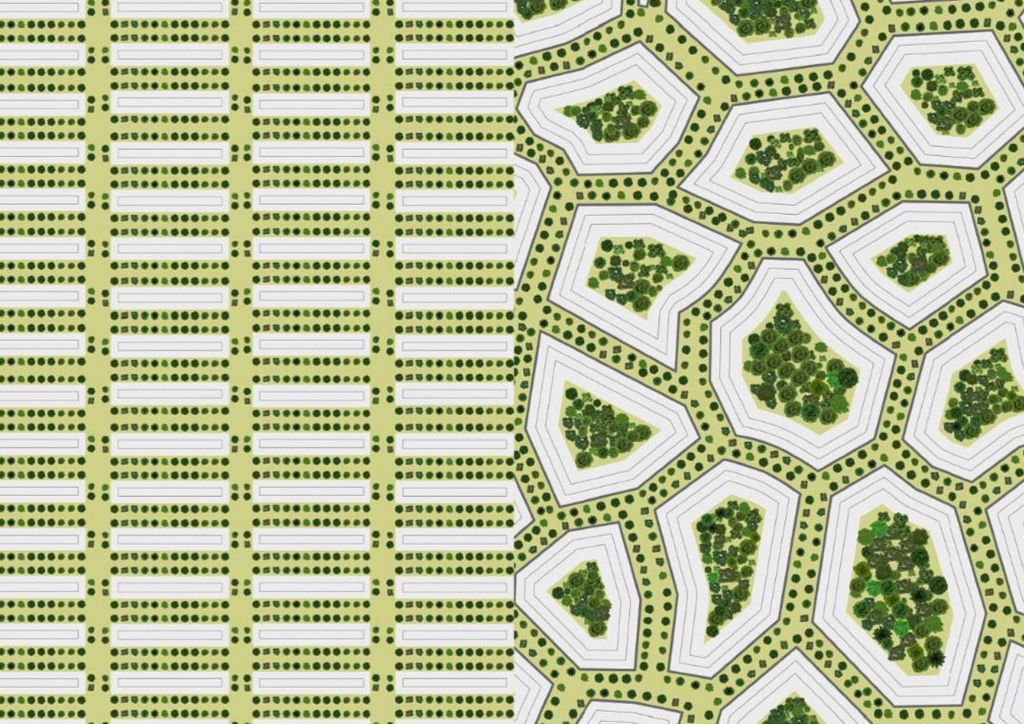
Art used with Permission by Dror Benshetrit | 2026
And then there's the proof. Because all the frameworks and tools in the world mean nothing without actual places where people can walk, live, and witness what's possible. Supernature Labs creates these places—flagship ecological districts that combine nature-inspired design, regenerative infrastructure, and cultural richness. These aren't demonstration projects. They're real communities, delivered through an asset-light approach, designed to scale and replicate across continents.
The Stakes: Why Now, Why This
Let's be real about the numbers. In the coming decades, cities will expand dramatically—billions more residents, massive new infrastructure still to be built, vast territories of undeveloped land about to be transformed. Meanwhile, urban emissions must drop sharply to meet global climate targets. We're facing a paradox: explosive growth that must somehow become regenerative.
The conventional approach—the grid-first, concrete-heavy, nature-as-amenity paradigm—has real costs. Urban heat islands that kill thousands during heat waves. Flooding risks that intensify with every storm. Lost carbon sinks, disappearing wetlands, fractured wildlife corridors. Infrastructure burdens that bankrupt municipal budgets. And a creeping disconnection between humans and the natural world that breeds anxiety, isolation, and despair.
REGENERATIVE DESIGN PRINCIPLES
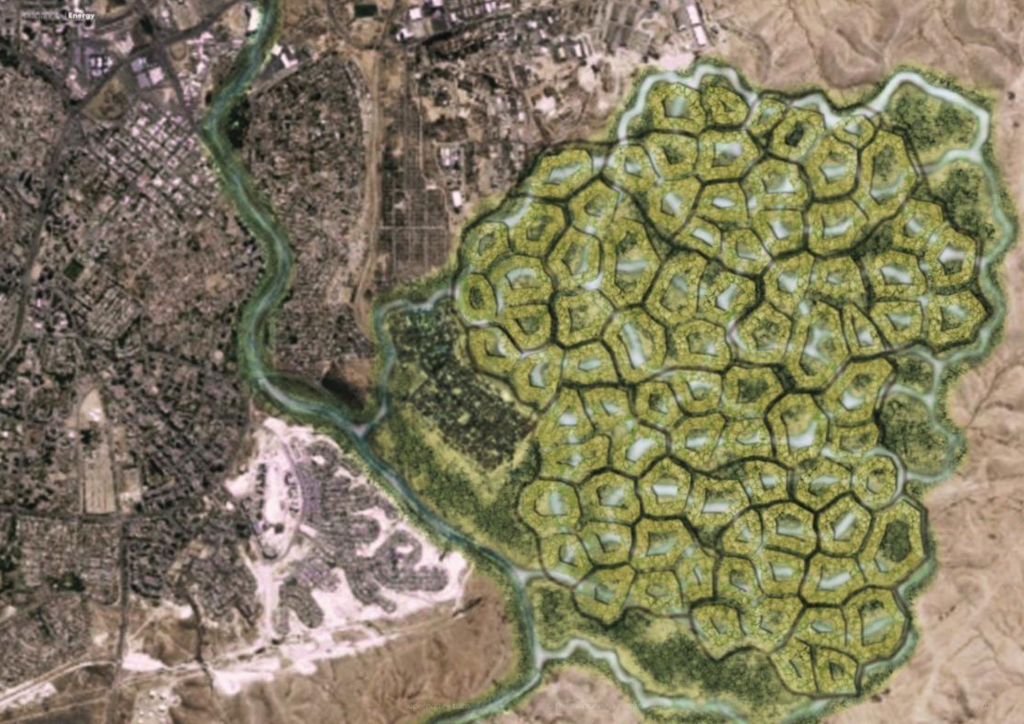
Supernature's premise—radical in its simplicity—is that nature-aligned geometry can fundamentally shift outcomes. Not incrementally. Fundamentally. We're talking about improved mobility patterns, increased green area, enhanced water management, better energy performance—all emerging from the same core principle: design with living systems, not against them.
"This isn't environmentalism as sacrifice. This is environmentalism as superior design."
LIFE: A New Standard for Living Systems
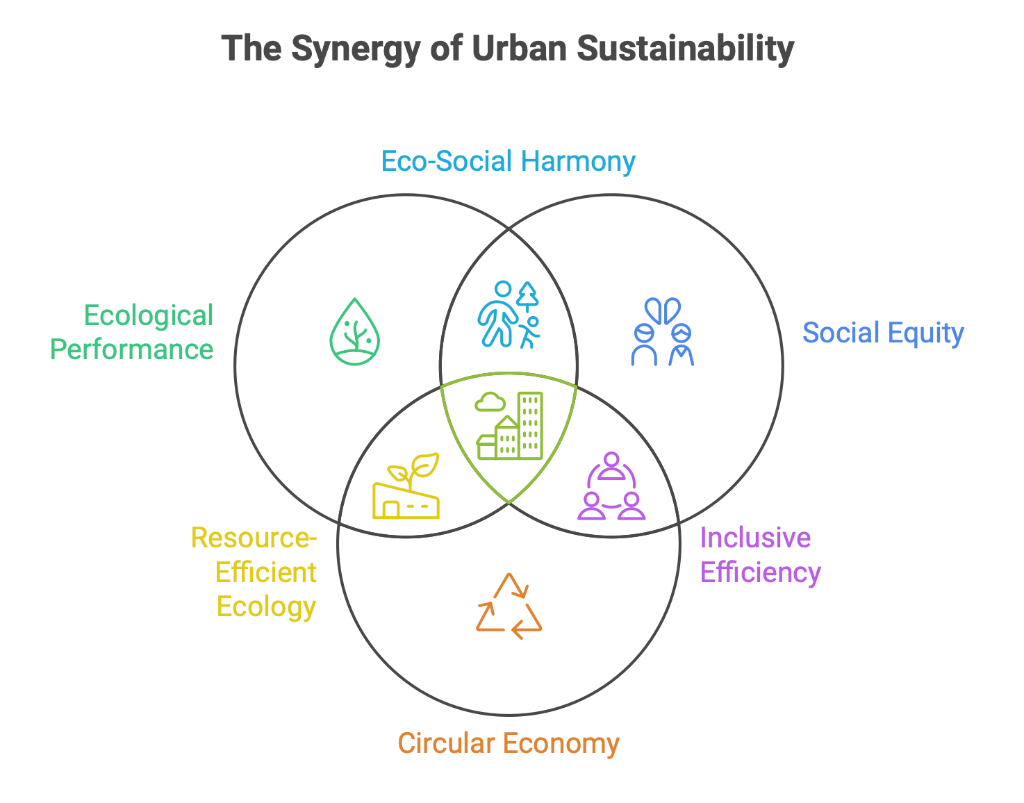
The Institute introduces LIFE—Living Infrastructure for Future Ecologies—as a district-scale certification concept that goes far beyond conventional "green building" metrics. Where LEED or BREEAM evaluate individual structures, LIFE evaluates interconnected living nodes. Where traditional certifications measure efficiency, LIFE measures regeneration.
The framework examines four integrated dimensions: biodiversity and ecosystem health (are species thriving or declining?); regenerative water and energy systems (does the district give back more than it takes?); social connection and community wellbeing (are people flourishing, not just surviving?); and climate resilience (will this place endure through the turbulence ahead?).
It's a shift from asking "How little harm can we do?" to asking "How much life can we create?"
Humanitarian Impact Capital: Investing in Civilization
This is where the conversation shifts from what to how—and more importantly, who. Because here's the truth that most impact investors won't say out loud: the biggest humanitarian crises of the coming decades won't be natural disasters. They'll be planning disasters.
When cities sprawl without ecological consideration, it's not the wealthy who suffer. The elites retreat to their compounds, install their air conditioning, drill their private wells. It's the billions in expanding urban peripheries who bear the costs: no shade, no clean water, no access to nature, no resilience when systems fail. This is a social justice issue dressed in the language of urbanism.
Investment in Supernature represents a different kind of capital deployment—what we might call humanitarian impact capital. It funds the development of open-source frameworks that any city can use. It supports educational programs that train the next generation of ecological planners, especially in the Global South where the majority of urban growth will occur. It accelerates AI tools that democratize access to sophisticated planning capabilities, leveling the field between well-resourced and under-resourced municipalities.
Most critically, it funds pilot implementations—the first movers, the proof points, the demonstrations that give political leaders and developers the confidence to choose a different path. This is infrastructure for systems change, not infrastructure for another development project.
"You don't change civilization by building one great city. You change civilization by making it possible for every city to build better."
The Ripple Effect: What Support Enables
Support for this work enables scientific validation through partnerships with leading universities and research institutions—the peer-reviewed papers and published frameworks that give legitimacy to new approaches. Crucially, it centers Indigenous knowledge systems as co-designers of these frameworks, ensuring that millennia of ecological intelligence embedded in traditional land stewardship guides the evolution of regenerative design. It funds the creation of open educational materials and training pathways, ensuring that knowledge doesn't remain trapped in elite circles but flows to where it's needed most—especially to communities on the frontlines of both ecological crisis and traditional wisdom-keeping.
It accelerates the development of AI tooling that makes sophisticated ecological planning accessible at municipal scale—visualization engines, comparative analysis tools, automated scoring systems, professional learning platforms, and stakeholder matchmaking networks that connect cities with the expertise they need.
Perhaps most importantly, it supports cultural programming—the concerts, exhibitions, storytelling, and public conversations that shift the narrative around what cities can be. This includes amplifying Indigenous voices and Indigenous-led movements for decolonial governance that demonstrate how cities can be organized around reciprocity instead of extraction. Because technical solutions without cultural buy-in remain theoretical. You need popular will. You need desire. You need people to want this future—and to see themselves and their lineages reflected in it.
Art used with Permission by Dror Benshetrit | 2026
A Movement, Not a Moment
What Dror Benshetrit has assembled through Supernature isn't simply a company or even an organization. It's the architecture of a movement—one that recognizes that the great humanitarian challenge of our time is ensuring that the billions of people joining cities over the next thirty years can do so with dignity, beauty, and ecological integrity intact.
This is not incremental change. This is systems transformation—the kind that happens when method meets tools meets demonstration meets cultural shift meets capital meets political will. It's ambitious. Wildly so. But here's the thing: the scale of the challenge demands ambition. Half-measures guarantee failure. Incremental improvements guarantee catastrophe.
The question before us is simple: Will we build the next wave of human settlements using twentieth-century logic, or will we design them with the wisdom and technology of the twenty-first century? Will we repeat the mistakes that created our current urban crises, or will we forge a new path—one where cities become gardens, where infrastructure becomes living systems, where growth means regeneration rather than extraction?
Supernature has drawn the map. Now comes the journey.
Get real-time statistics, current events, and success metrics
Sources & References
Resurgence Magazine
"Urban populations use the bulk of the world's resources and are prime contributors to biodiversity loss. Regenerative design aims to reverse that by integrating green spaces and circular flows"
Related:
Resilience.org
"Urban design that reverses environmental degradation through ecological principles"
Related:
Academy of Urbanism
"Frameworks for building cities that restore ecosystems instead of degrading them"
Related:
BSAG - Sustainable Agriculture
"Bioplanning and the LIFE standard advocate planning that aligns urban form with natural patterns, so infrastructure coexists with life instead of competing"
Related:
Resilience.org
"Planning frameworks that align urban form with natural patterns and life cycles"
Related:
Agreena
"Regenerative practices rebuild soil organic matter, sequester carbon, and enhance biodiversity, making farms more climate-resilient and profitable"
Related:
NRDC
"No-till farming, cover crops, and rotations that enhance biodiversity"
Related:
For partnership and humanitarian impact capital inquiries:
Explore the Supernature Ecosystem
Learn more about flagship regenerative districts and discover grant opportunities for ecological urbanism.