We use cookies to personalize content and provide a better experience. By clicking "Accept All," you agree to our Cookie Policy and Privacy Policy.
El Refugio: A 680-Hectare Coastal Wilderness Sanctuary in Panama's Pearl Islands
Where ecological integrity and intentional stewardship create one of the last undeveloped properties of this magnitude in the Pacific.
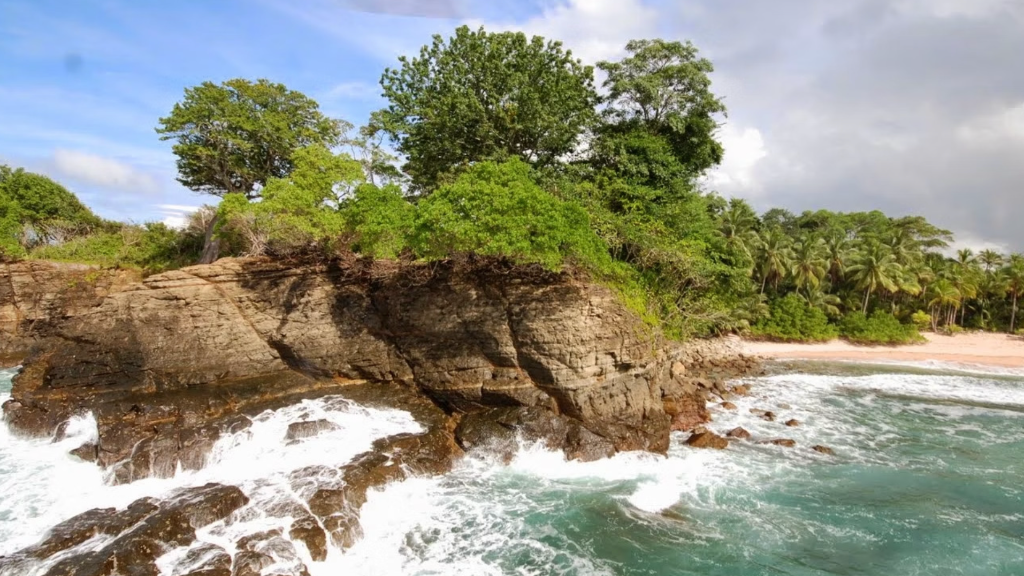
There are places on Earth where time seems to move differently—where the rhythms of tide and wind and forest canopy remain unhurried, untouched by the frenetic pace of modern development. El Refugio is one of those places. A rare, large-scale coastal wilderness estate in Panama's Pearl Island Archipelago, it represents something increasingly precious: a private sanctuary where ecological integrity and intentional stewardship can coexist, where development doesn't mean destruction, where preservation becomes the highest form of luxury.
The project centers on a contiguous 680-hectare landscape with 12 kilometers of uninterrupted Pacific beachfront, framed by river estuaries, freshwater lagoons, mangrove wetlands, and dense primary rainforest. This isn't a resort carved from the jungle. This is the jungle itself, offered as an opportunity for those who understand that the rarest form of wealth is wildness preserved.
"True luxury isn't what you build. It's what you choose not to destroy."
Why This Matters: The Vanishing of Wild Coasts
Here's the thing about coastal wilderness: it's disappearing faster than tropical rainforest. Across the world, true coastal privacy and intact ecosystems are being carved up, developed, destroyed—especially in places that can still support thoughtful, high-quality stewardship. El Refugio is one of the last undeveloped properties of this magnitude in the Pearl Islands, with tourism development zoning that enables a wide range of sustainable outcomes while keeping the land's essential wild character at the center.
The vision frames this as a "sovereign sanctuary" concept: privacy, discretion, and multigenerational continuity—not a high-traffic destination. Not another resort. Not another development that looks like every other development. This is about preservation with purpose, conservation with character, stewardship at scale.
The Numbers: What 680 Hectares Really Means
Let's be specific. We're talking about 680 hectares of contiguous land—that's 1,680 acres, roughly the size of 1,280 American football fields. Twelve kilometers of uninterrupted beach and ocean frontage. White and blush-pink sand beaches, dramatic headlands, river estuaries teeming with life, permanent freshwater lagoons, and dense primary tropical rainforest that has stood for centuries.
It's about 32 miles from Panama City as the crow flies—close enough to access, far enough to forget the world exists.
Arrival as Intention: No Roads, No Accidents
El Refugio is deliberately remote and private—no road access whatsoever. Arrivals are designed to be intentional: primarily by helicopter or by sea. From Panama City, you can arrive by plane in 20 minutes, helicopter in 25 minutes, or boat in roughly two hours. The point isn't inaccessibility. The point is choice. No one stumbles upon El Refugio. You come here because you decided to come here.
A Living Archive: Where Three Ecosystems Collide
One of El Refugio's defining attributes—what makes it scientifically as well as aesthetically extraordinary—is that it sits at the intersection of three interacting ecological systems: marine, wetlands, and rainforest. This creates unusually high biodiversity, the kind biological researchers spend careers studying.
The marine environment includes humpback whale migration corridors active from July through October, year-round dolphin and ray populations, sea turtle nesting beaches, and pristine reef zones where fish populations remain dense and diverse. The wetlands host mangrove nurseries—critical breeding grounds for countless species—tidal lagoons and estuaries, and permanent freshwater pools. The rainforest provides primary canopy with endemic bird species found nowhere else, protected wildlife corridors that allow species to move and thrive.
El Refugio isn't "next to nature." It is nature, functioning as an integrated land-sea system where each element supports and strengthens the others.
"This isn't a property with views of nature. This is nature, with room for careful human presence."
The Vision: Building Without Breaking
El Refugio is positioned as a flexible platform for stewardship-driven development. An estimated 40-50% of the total acreage is suitable for low-density development while preserving—actually enhancing—the land's natural character. Think private estates and multigenerational compounds where families can build legacy. Luxury hospitality that operates on ecological principles, where the experience is the ecosystem. Conservation initiatives that protect biodiversity while generating sustainable economic value.
The topology offers elevated ridgelines 50 to 150 meters above sea level for panoramic-view estate sites, coastal plains suitable for infrastructure-light amenities, river estuary zones supporting kayaking, birdwatching, and ecological preservation. This is development as curation, not exploitation.
The Steward: Lessons From Paradise Lost
The founder behind El Refugio has repeatedly encountered what unmanaged growth can do to special places—and responded by seeking locations where a more careful model is possible. As an early pioneer of Tulum's "barefoot-chic" era around 2000, building and operating boutique hotels before that coastline became unrecognizable, then expanding to projects on Little Corn Island in Nicaragua and Valle de Guadalupe in Baja California, the journey has been one of witnessing beauty destroyed and vowing to do better next time.
The path ultimately led to Panama's Pearl Islands with a more protective philosophy. This helps frame El Refugio less as a land play and more as a long-horizon commitment to getting development right—finally, after seeing what happens when you get it wrong.
"Paradise lost teaches more than paradise found. This time, we're choosing permanence over profit."
Privacy by Design, Impact by Choice
No road access ensures intentional arrival and creates a natural buffer. The scale of the property—680 hectares with 12 kilometers of beachfront—provides inherent privacy and seclusion that cannot be replicated in smaller developments. This is privacy not through gates and guards, but through geography and thoughtful planning.
CONSERVATION-DRIVEN STEWARDSHIP
El Refugio can serve as a model for conservation-driven development across Latin America and beyond. The framework being developed here—how to preserve biodiversity while creating economic value, how to build luxury without exploitation, how to generate long-term returns while maintaining ecological integrity—becomes a template for regenerative design at scale.
Investment in projects like El Refugio doesn't just preserve one coastline. It proves that preservation can be profitable, that stewardship can compete with extraction, that the highest form of development is often choosing what not to develop. That's humanitarian impact: creating models that others can follow, frameworks that scale, principles that endure.
Sources & References
Resurgence Magazine
"Urban populations use the bulk of the world's resources and are prime contributors to biodiversity loss. Regenerative design aims to reverse that by integrating green spaces and circular flows"
Related:
Resilience.org
"Urban design that reverses environmental degradation through ecological principles"
Related:
Academy of Urbanism
"Frameworks for building cities that restore ecosystems instead of degrading them"
Related:
CENSE Analytics
"When farmers lead regenerative shifts, local ecosystems recover and economies improve. Innovative carbon-credit programs provide new income streams for farming communities"
Related:
NRDC
"Farmers as stewards restoring ecosystems while building climate resilience"
Related:
Blocks and Files
"Nanofiche solves the migration issue of digital storage by engraving information on inert metal that will last 10,000+ years, making data impervious to cosmic radiation"
Related:
The Last of Its Kind
El Refugio represents one of the last opportunities to preserve and thoughtfully develop a coastal wilderness of this magnitude in Central America. Properties like this don't come to market. And once they're developed—once that decision is made—there's no going back.
The question isn't whether this land will be developed. The question is how. And by whom.
For partnership and humanitarian impact capital inquiries: